The Quantum-AI Nexus: A Trend Report on the Convergence of Future Technologies
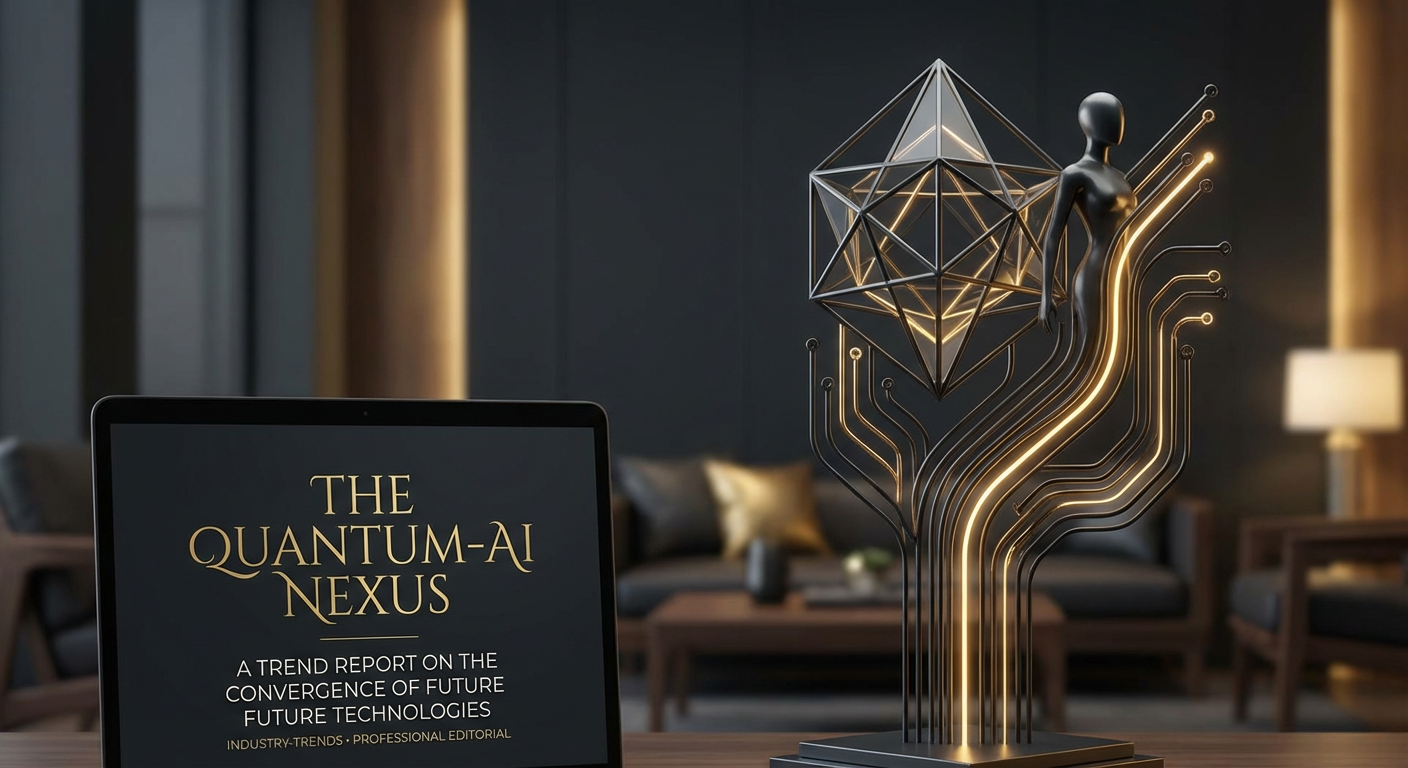
- quantum AI convergence trends
- future of AI and quantum
- impact of quantum on AI
- AI and quantum computing synergy
- quantum machine learning
- quantum optimization
- quantum talent strategy
The convergence of quantum computing and artificial intelligence (AI) represents a pivotal shift in the technological landscape, promising advancements that transcend the capabilities of either field in isolation. This trend report examines the strategic implications and transformative potential of the quantum-AI nexus for senior professionals and C-suite executives. Understanding this synergy is crucial for maintaining a competitive edge and navigating the complex future of innovation. The integration of these two advanced disciplines is not merely additive; it is multiplicative, poised to unlock solutions to problems currently intractable. For instance, Deloitte projected that quantum computing could add $850 billion to the global GDP by 2040 (Deloitte, 2023).
The Quantum-AI Nexus: Defining the Convergence
The quantum-AI nexus refers to the strategic integration of quantum computing principles and artificial intelligence algorithms to create more powerful and efficient computational systems. This convergence leverages quantum phenomena such as superposition and entanglement to enhance AI capabilities, particularly in areas like machine learning, optimization, and data analysis. Conversely, AI can accelerate quantum research and development by optimizing quantum circuit design and error correction. This symbiotic relationship is driving unprecedented innovation across various sectors. A recent IBM report indicated that 73% of C-suite executives believe AI will be critical for their organization's success in the next three years (IBM, 2023), underscoring the urgency of understanding these advanced integrations.
Quantum Computing's Role in Supercharging AI
Quantum computing offers a paradigm shift in processing power, enabling AI algorithms to tackle problems of immense complexity. Specifically, quantum machine learning (QML) algorithms can process vast datasets and discern patterns in ways classical computers cannot. For example, Google AI's Sycamore processor demonstrated quantum supremacy in 2019 by performing a computational task in 200 seconds that would have taken the fastest supercomputer 10,000 years (Google AI, 2019). This exponential speedup is particularly valuable for training deep learning models and solving complex optimization problems in logistics and finance. The potential for quantum algorithms to enhance AI's learning capabilities is a primary driver of this convergence.
AI's Contribution to Accelerating Quantum Development
Artificial intelligence is proving indispensable in accelerating the development and optimization of quantum systems. AI-driven tools can streamline the design of quantum processors, predict qubit behavior, and improve error correction techniques, which are critical challenges in building stable quantum computers. For example, researchers at IBM are utilizing AI to automate the tuning of quantum hardware, significantly reducing the time and resources required for experimentation. This application of AI is vital for overcoming the inherent fragility and complexity of quantum systems, making quantum computing more accessible and reliable. A study by Accenture revealed that 84% of executives believe AI will play a significant role in improving R&D efficiency (Accenture, 2023).
Key Areas of Quantum-AI Synergy
The convergence of quantum and AI is manifesting across several critical domains, each promising transformative advancements.
Quantum Machine Learning (QML): QML refers to the integration of quantum algorithms into machine learning tasks, offering potential speedups for pattern recognition, classification, and regression. This can lead to more efficient drug discovery and financial modeling. For example, Zapata Computing is actively developing QML solutions for enterprise clients.
- Enhanced Optimization: Quantum optimization algorithms, when combined with AI, can solve complex logistical and supply chain problems with greater efficiency than classical methods. Companies like Volkswagen are exploring quantum computing for traffic flow optimization.
- Advanced Simulation: Quantum computers can simulate molecular interactions with unprecedented accuracy, a capability that, when paired with AI, accelerates materials science and pharmaceutical research. This is particularly relevant for drug discovery where AI can identify potential compounds for quantum simulation.
- Cryptographic Breakthroughs: The development of quantum-resistant AI algorithms is crucial for future cybersecurity. This involves using AI to design and test new cryptographic methods that can withstand quantum attacks.
Quantum AI vs. Classical AI: A Comparative Analysis
Understanding the distinctions between quantum-enhanced AI and classical AI is essential for strategic planning.
Classical AI relies on traditional computational paradigms and algorithms, whereas Quantum AI leverages quantum mechanical principles for processing information.
- Processing Power: Classical AI is limited by transistor-based operations; Quantum AI utilizes qubits, enabling exponential processing power for specific problems.
- Problem Scope: Classical AI excels at well-defined, data-rich problems; Quantum AI is uniquely suited for complex optimization, simulation, and pattern recognition in high-dimensional spaces.
- Data Requirements: Classical AI often requires massive datasets for training; Quantum AI may achieve significant results with less data due to its ability to explore vast solution spaces simultaneously.
- Error Rates: Classical AI systems are robust to minor errors; Quantum AI faces significant challenges with decoherence and error correction, though AI is helping mitigate these issues.
Industry Impact and Real-World Applications
The quantum-AI nexus is poised to revolutionize numerous industries, creating new opportunities and challenges for leaders.
Financial Services
In financial services, quantum-enhanced AI can significantly improve fraud detection, algorithmic trading, and risk management. JPMorgan Chase, for instance, has been exploring quantum algorithms for portfolio optimization and pricing complex financial derivatives. The ability to process vast amounts of market data with quantum speed could lead to more accurate predictive models, providing a substantial competitive advantage. A report by PwC projected that AI could contribute up to $15.7 trillion to the global economy by 2030, with a significant portion driven by advanced applications like those enabled by quantum computing (PwC, 2017).
Healthcare and Pharmaceuticals
The healthcare sector stands to benefit immensely from quantum-AI convergence, particularly in drug discovery and personalized medicine. Quantum simulations of molecular structures, combined with AI's ability to analyze vast biological datasets, can drastically reduce the time and cost associated with developing new treatments. Companies like AstraZeneca are investing in AI-driven drug discovery platforms, with future integrations of quantum capabilities expected to accelerate these efforts even further. This could lead to breakthroughs in treating complex diseases. The global AI in healthcare market is projected to reach $194.4 billion by 2030 (Grand View Research, 2022).
Manufacturing and Logistics
In manufacturing and logistics, quantum-AI can optimize supply chains, improve predictive maintenance, and enhance resource allocation. Quantum optimization algorithms, informed by AI's predictive capabilities, can identify the most efficient routes and schedules, minimizing waste and maximizing throughput. Boeing is exploring quantum computing for optimizing aircraft design and manufacturing processes. This level of optimization can lead to significant cost savings and increased operational efficiency across global supply networks.
The convergence of quantum and AI is not just a technological advancement; it's a strategic imperative for any organization aiming to lead in the next decade.
Navigating the Talent Landscape for the Quantum-AI Era
The specialized skills required for the quantum-AI nexus present a significant talent challenge. Organizations need professionals proficient in both quantum mechanics and advanced AI/machine learning. This demands a proactive approach to talent acquisition and development. Referencing "The Elite Talent Playbook: Mastering Acquisition and Retention for Quantum Club Members" (/blog/talent-strategy/the-elite-talent-playbook-mastering-acquisition-and-retention-for-quantum-club-m-4), it is clear that attracting and retaining these niche experts will require competitive compensation, cutting-edge research opportunities, and a culture of continuous learning. Leaders must also possess a "Quantum Leader's Stack" (/blog/leadership/the-quantum-leader-s-stack-essential-qualities-for-navigating-the-future-of-indu-3) to effectively guide teams in this evolving landscape.
Q&A: Addressing Common Questions about Quantum-AI Convergence
What is the primary barrier to widespread quantum-AI adoption?
The primary barrier to widespread quantum-AI adoption is the immaturity of quantum hardware and the scarcity of professionals with expertise in both quantum mechanics and AI. Current quantum computers are prone to errors and lack scalability, while the talent pool remains limited, necessitating significant investment in education and infrastructure.
How will the quantum-AI nexus impact job roles?
The quantum-AI nexus will create new highly specialized job roles, such as quantum machine learning engineers, quantum algorithm developers, and AI-enhanced quantum researchers. Existing roles in data science and AI will evolve to incorporate quantum considerations, demanding continuous upskilling and cross-disciplinary knowledge. This is further explored in "Your AI Career Playbook: Landing Your Dream Job in Artificial Intelligence" (/blog/career-insights/your-ai-career-playbook-landing-your-dream-job-in-artificial-intelligence).
When can we expect significant commercial breakthroughs from quantum-AI?
While foundational research and incremental advancements are occurring now, significant commercial breakthroughs from quantum-AI are generally anticipated within the next 5-10 years. This timeline is dependent on overcoming current hardware limitations and developing more robust quantum software, as well as the continued investment from both private and public sectors. Early applications are likely to emerge in highly specialized fields like materials science and drug discovery.
The future of innovation lies at the intersection of disciplines. Quantum and AI are not just converging; they are creating an entirely new frontier of possibilities.
Strategic Recommendations for Executives
To capitalize on the quantum-AI nexus, executives must adopt a forward-looking and integrated strategy. This involves understanding the technological roadmap, investing in talent, and exploring strategic partnerships. Proactive engagement with this emerging field is critical for long-term competitive advantage. Early movers in this space will define the next generation of industry standards.
Actionable Takeaways for This Week:
- Convene an internal task force to assess potential quantum-AI applications relevant to your core business, identifying 2-3 high-impact use cases.
- Allocate a dedicated research budget for exploring quantum-AI proof-of-concept projects, focusing on areas like optimization or advanced data analysis.
- Initiate discussions with leading academic institutions and quantum technology providers to understand partnership opportunities and access emerging talent.
- Review your talent acquisition strategy to identify gaps in quantum computing and advanced AI expertise, considering reskilling existing teams and targeting specialized hires.
- Educate your leadership team on the fundamental concepts and strategic implications of quantum-AI convergence to foster informed decision-making.
Frequently asked
The quantum-AI nexus refers to the strategic integration of quantum computing principles and artificial intelligence algorithms to create more powerful and efficient computational systems, leveraging quantum phenomena to enhance AI and vice-versa.